Youth Engagement in Preserving Culinary Heritage in Zambia
Author: Mutinta Mweemba Nabuyanda
Introduction
Food is much more than sustenance; it represents culture, history, and identity. In Zambia, culinary traditions vividly reflect the country’s ethnic diversity and deep connection to the land. Staple dishes such as nshima, made from maize, and ceremonial foods like chikanda carry centuries of indigenous knowledge related to agriculture, nutrition, and ecological stewardship.

Credit: via Google
Indigenous Knowledge and Traditional Food Practices in Zambia
While Zambia’s indigenous food systems encompass a wealth of traditional agricultural and foraging knowledge, globalization and urbanization threaten the continuity of these traditions. Communities like the baTonga have long depended on wild fruit, tubers such as lusala (Dioscorea hirtiflora bent), and leafy vegetables like bondwe (Amaranthus spp.), which thrive in local ecosystems and provide vital nutrition, especially during droughts. Foraging practices exemplify resilience, especially during severe food shortages intensified by climate change, such as the historic 2023/2024 drought—the driest in over sixty years (Nkwazi Magazine, 2024). People gather bowa (wild mushrooms) and Finkubala (Mopani worms) from the miombo woodlands, leafy greens like bondwe (amaranth), and edible tubers such as chikanda roots, drawing on knowledge passed down through generations.
Traditional crops such as okra, mundambi (Roselle), and chibwabwa (pumpkin leaves) demonstrate how native plants adapted to Zambia’s environment are core to sustainable food practices. These crops require minimal inputs and help support smallholder farmers, including women, by providing nutrition and income through market sales, as highlighted in material published in 2025 by the Anantara Hotels Blog.

Credit: via Google
Threats from cultural diffusion and unsustainable farming practices undermine these systems. Research from recent humanities and social sciences scholarship, including a 2024 journal study and Zambia’s 2023 national reporting, highlights the risk of losing traditional food utility caused by the influx of foreign influences and improper land use without soil and water conservation technique.
Alignment with Sustainable Development Goal 2 (Zero Hunger) and 15 (Life on Land)
The preservation of culinary heritage, including indigenous crops, traditional food knowledge and cooking practices, is critical to achieving SDG 2 (Zero Hunger) as it promotes sustainable food systems that value indigenous crops and resilient farming practices. The preservation of indigenous knowledge of food preparation, storage, and seasonal eating contributes to sustainable livelihoods, while SDG 11.4 calls for the preservation of natural and cultural heritage.
SDG 15 aims to protect, restore, and promote sustainable use of terrestrial ecosystems while halting deforestation, land degradation, and biodiversity loss. In Africa, where over 60% of livelihoods depend on land and forests, achieving SDG 15 is critical for food security, climate resilience, and cultural identity, a reality underscored in recent analysis by the African Centre for Environment. Community forest patrols, reforestation efforts, and the protection of customary land rights are instrumental in these endeavours, as highlighted by specialists working on SDG 15 implementation.

Credit: via Google
Youth Engagement in Cultural Heritage Preservation
Youth play an essential role as custodians of culture and drivers of sustainable development. African programs focusing on youth heritage empowerment, as documented by UNESCO, demonstrate the value of engaging young people in cultural preservation through training, civic engagement, and entrepreneurship.
In Zambia, integrating youth through storytelling, cookery, and digital platforms revitalises culinary heritage while fostering intergenerational knowledge transfer for cultural continuity, as reflected in recent heritage-focused reporting by ICCROM.
To demonstrate and encourage this idea of promoting and preserving indigenous foods, I organized an initial one-day cooking session on 31st August 2025 with a number of selected youths from the neighbourhood of Lusaka West farms, approximately 16km from the central business district of Lusaka. This initiative was born out of the interest generated through my engagements as a member of the IFLA CCH Committee and a cultural rights defender, informed by ongoing work within the International Federation of Library Associations and Institutions.
Credit: via Google
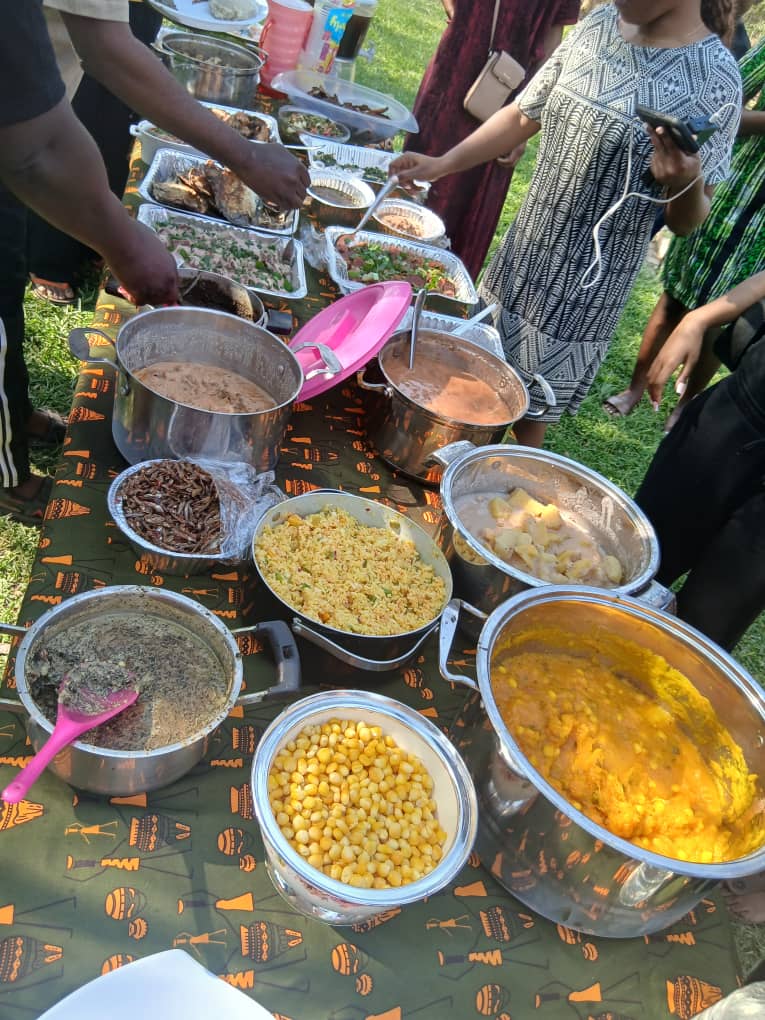
The selected youths were either in high school, tertiary or in employment. Different traditional foods were identified and provided for the youth to prepare. I segmented the youth into 3 groups of “Cooking stations”. Five mothers (elderly women) volunteered to provide guidance and instructions to the youth in the preparation and presentation of the foodstuff with lessons on the value of each dish and preservation methods.
At the first cooking station, participants prepared Chikanda (wild orchid tubers), the famed ‘African polony,’ in peanut sauce, complemented by Chimpapila (cowpea leaves) and Chibwabwa (pumpkin leaves) cooked in groundnut paste. Siavonga Kapenta (semi sun-dried fish) was stewed with tomatoes and onions, while Kafue Inswi (bream) was grilled over embers. These dishes have for long sustained communities in Zambia’s northern region.
The second station presented a challenge with Makowa Relish (dehydrated wild cucumber in groundnut paste) and Chidyobbo, a wholesome mash of Chitende (pumpkin) and mapopwe (maize), delicacies of the Tonga people in the south. Participants also made Chimbwali (sweet potatoes) in creamy groundnut sauce, Impwa Stew (bitter wild eggplant), and Nsima cooked from maize, sorghum, and millet meal. A refreshing Busika (tamarind) drink and Mabuyu (baobab) yoghurt completed the menu.
At the third station, Bowa (wild mushroom) stew and Lusala roots simmered in peanut sauce showcased the nut’s versatility. Nkuku (village chicken) was slowly cooked with tomatoes and onions until tender, producing a rich, aromatic gravy.
The cooking sessions were interspaced with exchange of knowledge on the nutritional value of the various dishes which were being prepared and how to naturally preserve them. The use of alternative fuel sources such as agricultural waste and other biomass as cooking fuel, reducing reliance on wood and charcoal, was encouraged. This was done not only to help curb deforestation but also to promote healthier living environments, preserve Zambia’s cultural heritage, and encourage sustainable cooking. A few community members, guardians and friends, were invited for the meal and provided feedback on the various dishes. Overall the feedback was very positive which gave the youth encouragement to embark on a sustainable growth of the program.
Reflections from some of the youth participants highlight the appreciation, personal growth and communal bonds formed during the traditional cooking experience:
1. Kabayi (26)
"Adaptability became a key lesson for me. Shared responsibility showed that teamwork really does make the dream work," she said, highlighting life lessons beyond culinary skills.
2. Kabota (19)
"It wasn’t just about the food: it was about reconnecting with culture and with each other," she recalled, evoking the warmth of family gatherings and storytelling.
3. Kalwa (20)
She shared her enthusiasm for learning recipes like lusala and nshima, appreciating the challenge of cooking communally and the friendships formed.
4. Nduba (23)
At Cooking Station One, she prepared protein-rich dishes under the guidance of “motherly” mentors who shared both recipes and cultural stories, making the experience joyful and immersive.
5. Komana (20)
She gained confidence in preparing traditional meals and valued communal feedback that fostered unity and cultural pride.
6. Lumba (25)
He called the challenge, “a moment of learning and rediscovery,” saying, “I got to prepare dishes I’d always eaten but never made; it reminded me of our roots, belonging, and the humility to seek guidance.”


Credit: via Google
7. Wiza (20)
He described the event as a reunion that deepened his appreciation for shared heritage through storytelling and food.
8. Mazunda (22)
He highlighted the joy of teamwork and learning traditional fish preparation, underscoring the value of preserving culture with friends and family.
9. Buyemba (26)
She described the event as “exciting and humbling,” noting that leading her team in cooking traditional dishes required “focus, patience, teamwork, and trust,” and gave her deeper appreciation for “the skill and wisdom behind our traditional foods.”
10. Manji (24)
He expressed gratitude for the experience and urged that such events become traditions, celebrating healthy, varied dishes within the community.
11. Beenzu (20)
"Food is more than a meal, it’s a memory, a culture, and love served on a plate," she said. “I think I’ve been promoted from professional eater to chef-in-training for traditional dishes.”


Credit: via Google
AI and Digital Platforms for Cultural and Food System Preservation
While the sessions were captured on video and through photos, participants used their personal gadgets to note down the knowledge gained for sharing and future reference. Notably, Artificial Intelligence (AI) and digital technologies offer innovative tools for documenting, preserving, and promoting intangible cultural heritage, including food traditions. Community-led AI initiatives support the preservation of recipes, indigenous crops, and traditional practices, making this knowledge accessible to future generations while strengthening local food sovereignty, a trend highlighted in 2025 in the Sustainability Directory.
The International Maize and Wheat Improvement Centre- CIMMYT, a global agricultural research institute, headquartered in Mexico, works largely in the Global South, and has launched the Atubandike initiative in Zambia. This program trains young community members as Digital Champions to bridge digital and social divides, enabling inclusive, climate-smart agriculture. When this knowledge is organized into a community-driven digital app or database, it enables wider access and utilization, empowering local farmers and households to make informed, climate-resilient food choices. Such platforms also support SDG 2 by enhancing food security and nutrition. In this way, digital preservation of culinary heritage fosters resilient food systems and cultural continuity simultaneously.
Conclusion
Leveraging indigenous knowledge is essential to preserving Zambia’s culinary heritage. This effort in turn sustains biodiversity, ecosystem health, and cultural identity, while offering sustainable solutions to environmental challenges, particularly in drought-prone contexts. Youth involvement, as demonstrated by their lived reflections of learning and bonding, and digital innovation, expand the reach and impact of these efforts to preserve culinary heritage. In this way, cultural and ecological legacies endure. A return to indigenous knowledge systems can enhance food security and sustain local livelihoods in the midst of contemporary challenges. By promoting resilient food systems, improved nutrition, and sustainable agriculture, these practices contribute to SDG 2 (Zero Hunger). They align with Goal 15 by highlighting the integral role of indigenous food systems in protecting life on land. Community activities such as the one highlighted will ensure preservation and sustainability of local indigenous foods.
References
African Centre for Environment. (2025). SDG 15: Life on Land. Retrieved from https://aceeca.org/2025/04/02/sdg-15-life-on-land
Anantara Hotels Blog. (2025, July 23). Sustainable food practices in Zambia: Farm to table at Anantara. Retrieved from https://www.anantara.com/en/blog/sustainable-food-practices-in-zambia
Current Journal of Humanities, Arts and Social Sciences. (2024). The impact of traditional food on cultural preservation in Zambia. Retrieved from https://zapjournals.com/Journals/index.php/cjhass/article/download/1889/2366/2424
Fisher, M. (2024, December 10). How Atubandike dialogues are redefining gender and youth inclusion in Zambian agriculture. Retrieved from https://www.cimmyt.org/blogs/how-atubandike-dialogues-are-redefining-gender-and-youth-inclusion-in-zambian-agriculture/?utm_source=chatgpt.com
ICCROM. (2025). How can we involve African youth in heritage? Retrieved from https://www.iccrom.org/news/how-can-we-involve-african-youth-heritage
IFLA. (2025, August 01). Libraries defending cultural rights: an interview with African Librarian Cultural Rights Defenders Retrieved from https://www.ifla.org/news/libraries-defending-cultural-rights-an-interview-with-african-librarian-cultural-rights-defenders/
Kingsfari. (2024, September 10). Taste of Zambia: A Culinary Journey. Retrieved from https://www.kingsfari.com/blog-posts/taste-of-zambia-a-culinary-journey
Nkwazi Magazine. (2024, August 31). Reclaiming Indigenous Foodways: Ancestral Practices for Drought Resilience. Retrieved from https://nkwazimagazine.com/reclaiming-indigenous-foodways-ancestral-practices-for-drought-resilience/
SDG 15 Experts. (2025, April). Experts discuss drivers, solutions to biodiversity loss. Retrieved from https://prism.sustainability-directory.com/scenario/community-led-ai-for-resilient-local-food-systems/
UNESCO. (2023). Empowering Kenya's Youth for Heritage Preservation and Promotion. Retrieved from https://www.unesco.org/en/articles/empowering-kenyas-youth-heritage-preservation-and-promotion
United Nations. (2015). Transforming our world: The 2030 Agenda for Sustainable Development. New York: United Nations. Retrieved from https://sdgs.un.org/goals/goal2
Zambia National Report. (2023, July). Theme: Embracing a Transformative and Sustainable Food System. United Nations Food Systems Summit. Retrieved from https://summitdialogues.org/wp-content/uploads/2021/10/Draft-1Zambia-UNFSSD-Draft-Report-21-09-2021.pdf
Mutinta Mweemba Nabuyanda – Career Profile
Mutinta Mweemba Nabuyanda is a Zambian professional in Library and Information Sciences (LIS) committed to transforming access to information through cultural heritage preservation and knowledge equity. A former President of the Library and Information Association of Zambia (LIAZ), she led initiatives to enhance member engagement, advocate progressive library legislation, and strengthen professional development. Under her leadership, LIAZ expanded its membership and raised the international visibility of Zambian librarianship within the Southern African region.
Mutinta actively promotes the preservation of Zambia’s Indigenous Knowledge through advocacy and collaboration with universities and international partners. Her interests include Knowledge Management, Digital Literacy, Open Access, and Cultural Heritage, with a focus on integrating indigenous knowledge into modern information systems and sustainable development.
A cultural rights advocate, she champions the use of technology to empower communities and preserve cultural identity. She envisions a future where information is universally accessible, enabling meaningful participation in social, economic, and cultural development.

Author: Mutinta Mweemba Nabuyanda
About the African Perspectives Series
TheAfrican Perspective Series was launched at the 2022 Nigeria International Book Fair with the first set of commissioned papers written and presented by authors of the UN SDG Book Club African Chapter. The objective of African Perspectives is to have African authors contribute to the global conversation around development challenges afflicting the African continent and to publish these important papers on Borders Literature for all Nations, in the SDG Book Club Africa blog hosted in Stories at UN Namibia, on pan-African.net and other suitable platforms. In this way, our authors' ideas about the way forward for African development, can reach the widest possible interested audience. The African Perspectives Series is an initiative and property of Borders Literature for all Nations.
Copyright Statement
First published on Borders Literature for All Nations (www.bordersliteratureonline.net) as part of the African Perspectives Series.
Borders Literature for All Nations is registered with the Nigerian Copyright Commission (NCC). Registration No. LW0620.
All rights reserved. Please credit the author and site when sharing excerpts.
For permissions, contact: host@bordersliteratureonline.net cc: bordersprimer@gmail.com
Updated and re-illustrated edition prepared for the anthology Living Sustainably Here: African Perspectives on the SDGs (2026).
© 2026, Selina Publications, (A division of Selina Ventures Limited)
Selina House, 4 Idowu Martins Street, Victoria Island, Lagos, Nigeria
Email: selinaventures2013@yahoo.com